





ACID vs BASE: Database Transaction Models Explained
July 23, 2026When we talk about databases and transactions, two fundamental models come up: ACID and BASE. These two approaches hold a different philosophy about consistency and availability. In this complete guide we examine the meaning, differences, and use cases of each.
What Is ACID?
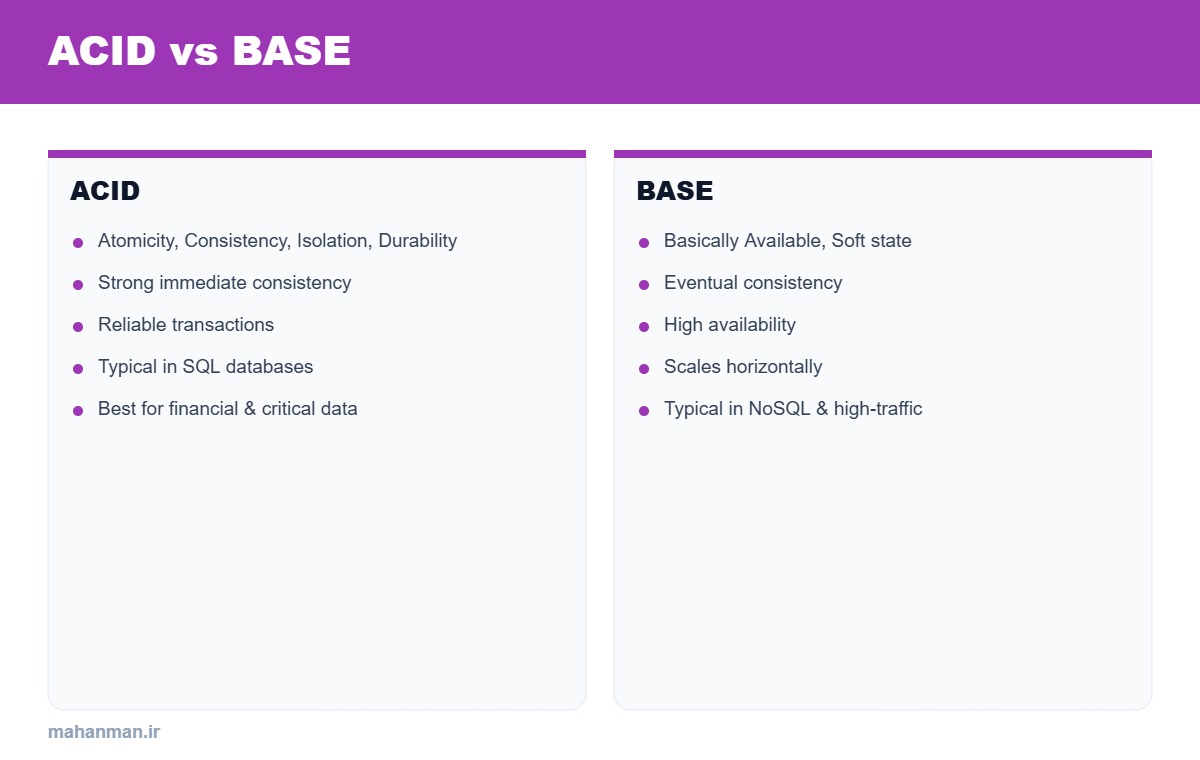
ACID is a set of guarantees for reliable transactions and stands for four principles: Atomicity (all or nothing), Consistency (data always in a valid state), Isolation (transactions do not affect each other), and Durability (data persists after commit). Relational databases like PostgreSQL and MySQL are built on this model.
What Is BASE?
BASE is a more flexible approach for large distributed systems and stands for Basically Available, Soft state, and Eventual consistency (data syncs eventually). Many NoSQL databases follow this model.
The Main Difference: Consistency vs Availability
ACID guarantees strong, immediate consistency but has limits at distributed scale. BASE prioritizes high availability and scalability and accepts that data may be briefly inconsistent. This choice is also related to the CAP theorem.
| Feature | ACID | BASE |
|---|---|---|
| Consistency | Strong & immediate | Eventual |
| Availability | Lower at high scale | Very high |
| Typically in | SQL databases | NoSQL databases |
When to Use Which?
For sensitive, critical data such as banking transactions, orders, and inventory, ACID is essential. For very high-traffic systems where availability matters more than instant consistency (such as social feeds and view counters), BASE is more suitable.
Frequently Asked Questions
Is NoSQL always BASE? No; some modern NoSQL databases also offer strong-consistency options.
Does eventual consistency mean lost data? No; it means data becomes synced across all nodes after a short time.
Conclusion
ACID focuses on reliability and consistency, BASE on availability and scale. Neither is absolutely superior; the nature of your data and your priority between consistency and availability determine the right choice.
